Where Creation Meets Casting: Building Performances That Last
Updated: Mar 2
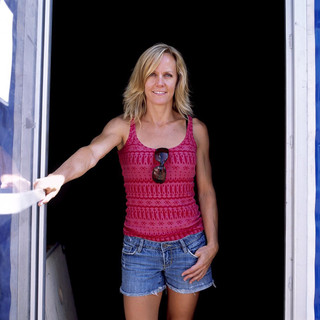
By Stacy Clark, C-Suite Performance

Julien on stage with audition candidates 
Jean-Damien with the Paris J-O 2024 BMX crew
In the performing arts, casting and creation are often treated as separate disciplines. One belongs to the audition space, the other to the rehearsal studio. One is seen as evaluative, the other as artistic. But in practice, the most successful productions are born where these two processes meet–long before opening night.
At their core, both casting and creation ask the same question: who can carry this work –safely, authentically, and sustainably– over time?
When performance is viewed through this shared lens, priorities begin to shift. Technical excellence remains essential, but it is no longer enough on its own. What rises to the surface instead is a deeper focus on the human being behind the skill.
Beyond Difficulty: The Value of Presence
Across circus arts, live entertainment, and action-based human performance, there has been a steady escalation of difficulty. Faster. Higher. Riskier. But on stage, spectacle without sustainability quickly becomes a liability.
What consistently proves more valuable than extreme difficulty is repeatability–the ability to deliver a performance with precision, awareness, and consistency, night after night.
As my co-founding partner Jean-Damien Climonet often emphasizes, “We’re not looking for daredevils. We’re looking for people who understand their level, who can repeat their work, and who know they’re performing with others.”
Stage work is not about singular feats. It is about reliability, generosity, and clarity of intention. Audiences may not consciously articulate this distinction, but they feel it immediately.
Jean-Damien puts it simply: “What matters as much as skill is the person–their values, their awareness, their ability to be honest on stage.”
Casting as Long-Term Vision
Casting is often misunderstood as a process of elimination rather than projection. In reality, strong casting decisions are rooted in foresight and potential.
The question is rarely, Is this person good enough today?More often, it is: Who could this person become in the right environment?
C-Suite Performance partner Julien Panel articulates this clearly: “By the time someone is invited to audition, there’s already a reason. What makes the difference is not just skill–it’s how they react, how they collaborate, how they listen.”
Videos and demo material open doors, but they do not tell the whole story. What matters just as much is how an artist integrates into a group dynamic and contributes to something larger than themselves.
Julien notes, “We’re not just casting individuals. We’re building casts.”
The Athlete-to-Artist Transition
One of the most underestimated challenges in performance careers is the transition from individual achievement to shared creation.
Athletes and highly specialized performers often come from environments that reward autonomy and short-term peaks. Stage work demands patience, repetition, and a willingness to place one’s skill inside a collective framework.
Jean-Damien speaks often about this adjustment: “Creation takes time. Rehearsals are not about doing the hardest tricks first–they’re about building structure. That can be the hardest part for performers coming from action sports.”
Yet when the transition succeeds, the results are powerful. Performers bring a lived physical intelligence that, when paired with structure and design, adds vitality and originality to the work.
Structure Enables Freedom
There is a persistent misconception that structure limits creativity. In reality, structure is what allows creativity to thrive.
When safety, timing, and spatial parameters are clearly defined, performers can explore nuance, spontaneity, and connection without compromising the integrity of the work.
Jean-Damien describes this balance succinctly: “The structure has to be solid so that within it, the artist can be alive.”
This is especially true when integrating action sports or hybrid disciplines into staged environments. The goal is not to replicate competition, but to translate its essence–speed, amplitude, unique skills–into a language that can live on stage.
Casting Is Not a Verdict
Rejection in casting is often experienced as final, but it rarely is.
As Julien reminds artists regularly, “A ‘no’ usually means ‘not now.’ Seasons change. Shows change. Needs change.”
Strong casting processes keep doors open. They recognize that talent does not disappear simply because it does not align with a specific moment. This long view benefits both artists and productions, fostering relationships rather than transactional outcomes.
Sharing Responsibility in Creation
Perhaps the most important takeaway is this: creation is not owned by directors alone, and casting is not owned by casting directors alone.
Artists shape the work through how they show up. Casting decisions influence what is creatively possible. Creative vision determines which performer profiles can truly thrive.
As Julien puts it, “Our job isn’t just to fill roles. It’s to create conditions where artists and productions can succeed together.”
When these elements are aligned, performance becomes more than impressive–it becomes sustainable, ethical, and alive.
The most enduring work in our industry is built not on excess, but on intention.
Not on risk alone, but on trust. And not on isolated brilliance, but on shared responsibility.
That is where creation and casting truly meet - not as separate functions, but as two expressions of the same commitment: to honour both the art form and the people who make it possible.
Julien and Jean-Damien were guests on CircusTalk's Pro Talks Series. Their quotes have been transcribed from those interviews. Visit the online platform StageLync.
Comments